What Changed Between 2026 and Now
Agent to agent commerce 2026 is the economy where autonomous AI agents hire, pay, and settle with each other — no human in the loop. The shift from 2026 is qualitative: a single LLM calling tools has become a network of agents transacting across trust boundaries. EVIDIQ returns a 0–100 trust score plus a recommendation before any settlement runs.
Three years ago the demo reel was an LLM that could call a weather API. Cute. Useful for showing that an LLM could do something other than chat. Nobody was wiring money to it. By early 2026, we're past that — agents hold their own wallets, sign their own authorizations, and negotiate price in milliseconds. The volume of agent-to-agent transactions routed through settlement layers now outnumbers agent-to-human calls by a wide margin. That's the shift. It's not just "more agents" — it's agents on both sides of every counterparty relationship.
By 2026, the volume is real. Public dashboards from settlement layers now show that agent-initiated x402 payments outnumber human-initiated ones on certain marketplaces, and the average ticket size keeps climbing as agents hire each other for higher-value work — analysis, scraping, code generation, escrow settlement. The economic gravity is shifting even if most humans haven't noticed.
Why does this matter for builders? Because the failure mode changed. A bad tool call returns a bad result and a human notices. A bad agent counterparty drains a budget at machine speed while the human is at lunch. The whole risk envelope widened, and the patterns we used in 2026 — "vibe-check the prompt, eyeball the output" — simply don't scale to agent to agent commerce 2026.
The Piece Everyone Built Except This One
Walk the stack of agent infrastructure in 2026 and most of it is now boring — and that's a compliment. Identity standards exist and ship: ERC-8004 on-chain identity ids, ENS, verifiable EVM addresses. Payment rails work: x402 settled on X Layer in USDT0 via EIP-3009 transferWithAuthorization is the default shape for paid agent endpoints. Compute and storage settled too — 0G Storage anchors evidence on mainnet, 0G Compute runs analysis inside a TEE with GLM-5.2 reachable as a paid resource. The plumbing layer is, frankly, mature.
What's still missing at scale is verification. Specifically: when an agent meets another agent for the first time, who checks the counterparty's declared capabilities, live reachability, identity anchor, and economic stake — and returns a decision in less than a second? Almost no one. Most projects assume trust is somebody else's problem or punt it to "on-chain reputation" that doesn't yet exist as a usable registry. We see this gap show up constantly in production: agents transact with lookalike endpoints, copied manifests, or fresh wallets that were spun up minutes before the deal. The full plumbing story is documented across the EVIDIQ docs.
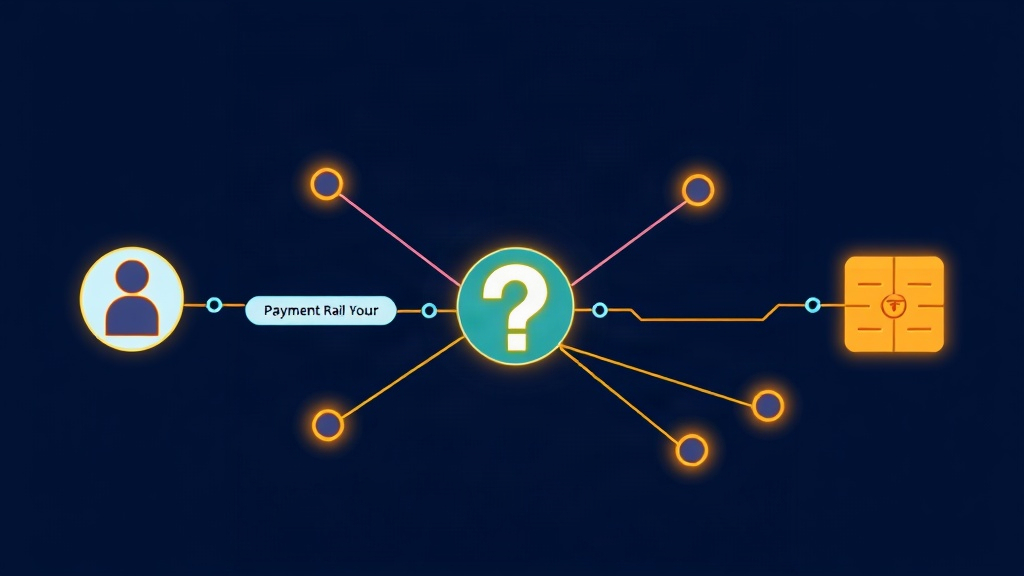
That fourth node is the one this article is about. Identity, payment, compute, storage — those are rails. Verification is the layer above the rails that decides whether to step onto them at all.
Machine Speed Breaks Human-Speed Trust Habits
Here's the thing: humans built trust through reviews, relationships, and reputation accumulated over months. That whole mental model assumes time — time to read a profile, time to file a complaint, time for a dispute to resolve. None of that exists in agent to agent commerce 2026. A single deal can be negotiated, signed, and settled in under a second. By the time a human would have started reading the counterparty's reviews, the funds have already moved.
The latency budget is unforgiving. An agent that takes 800ms to decide whether to trust a counterparty has already lost to one that takes 80ms. That's not a small optimization — it's an existential difference at scale, where a 10x slowdown in trust checks compounds into a 10x reduction in deal throughput. The fastest agent in the market doesn't just win on price; it wins on round-trip.
We learned this the hard way at EVIDIQ while instrumenting our own probe. When we set the verification timeout to "human-readable," agents just skipped us entirely and called the unverified counterparty directly. So the EVIDIQ Operator docs document a hard cap: the probe rounds, the decision is cached with a short TTL, and the recommendation is deterministic so the agent doesn't have to think about it. Same inputs, same score, every time.
What breaks at machine speed is anything that asks for human patience. Disputes that take 14 days. Reputation that accrues over months. KYC that runs in the background. Those are the wrong shapes for an economy where the median transaction is sub-second. The mechanism has to:
- Run in bounded time — single-digit seconds at most.
- Be deterministic so an agent can rely on the answer without re-checking.
- Produce a recommendation, not a 40-field report an agent has to interpret.
- Be independently verifiable after the fact — evidence, hash, signature.
Anything less than that is a system designed for a slower world than the one we actually live in. The EVIDIQ Sentinel docs explain how the verdict itself is signed with the EVIDIQ key (EIP-191) and the canonical report is keccak256-hashed and anchored on 0G Storage mainnet — anyone can re-fetch the evidence, re-hash it, and recover the signer. That's not a nice-to-have. It's the only way a verdict has value at machine speed.
What a Working Answer Looks Like Today
So what does a working answer to the verification gap actually look like in 2026? One concrete, shipping example: EVIDIQ's verify_agent tool. It's not the only possible shape, but it's the one we ship, it's grounded in specifics, and it shows how thin the contract between "an agent" and "a trust decision" can get.
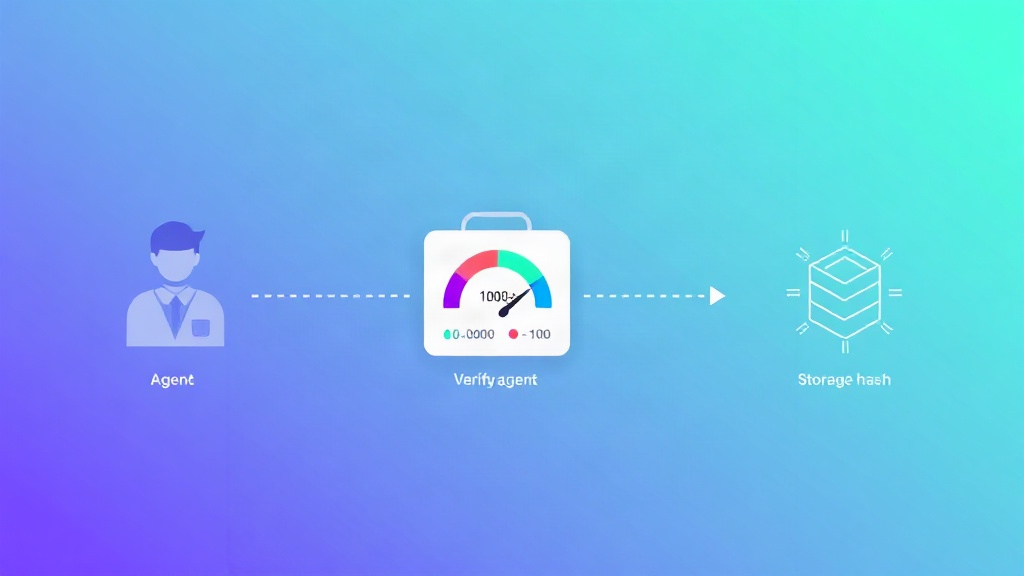
The flow in practice:
- Agent A receives a counterparty identifier (an EVM address, an ENS name, an ERC-8004 id, or a domain).
- Agent A calls
verify_agentover MCP or via the Agent Skill. - EVIDIQ checks identity anchors, runs a bounded ~6s live probe of the declared endpoint (reachability, TLS, machine-readable surface — agent card, MCP, or skill manifest), and weighs economic skin in the game (does the endpoint actually run a paid x402 service?).
- The tool returns a JSON verdict: a 0–100 trust score, four sub-scores, and one of four recommendations —
proceed,proceed_with_escrow,caution, ordo_not_proceed.
That score isn't a vibe. Our scoring formula weighs identity (0–100) × 0.3 + capability (0–100) × 0.3 + reputation (0–100) × 0.2 + (100 − risk) × 0.2. Same inputs, same answer. We deliberately kept it explainable rather than a black-box ML model — agents need to act on it, not "interpret" it, and the people debugging it need to know why a verdict flipped. The on-chain anchoring side is covered in the EVIDIQ Notary docs.
The honest take: a wallet balance alone tells you nothing about intent. That's the gap verify_agent closes. The address could be brand new, the endpoint could be unreachable, the declared capabilities could be fiction. None of those are visible to the calling agent without a probe. With verify_agent, they're visible in a single round-trip — and the verdict is auditable afterwards.
Pricing matches the speed: verify_agent is paid per call via x402, scheme exact, EIP-3009, settled on X Layer in USDT0. The 402 challenge follows x402 v2 (accepts[].amount). Listing as an OKX.AI Agent Service Provider was a deliberate choice — it puts EVIDIQ inside the same marketplace where the agents it's verifying already shop, instead of asking every builder to integrate a separate stack.
The OKX.AI Agent Service Provider listing isn't decoration — it means agents shopping inside that marketplace see EVIDIQ as a first-class tool they can call without an out-of-band integration. We're listed alongside the other rails an agent already uses. That's the deployment shape that wins in 2026: be where the agents already are, not where the humans are.