
A $50 autonomous agent spins up at 3am, hits your API, completes a transaction in 800 milliseconds, and disappears. You have no idea who deployed it, what it's authorized to do, or whether it's coming back. That's not a hypothetical anymore — that's a daily fact of agent to agent commerce 2026.
Three years ago, "AI agents" mostly meant a single LLM wrapping tool calls. Today, agents are buying compute, hiring other agents, paying for data, settling invoices. The shift is qualitative: agents are transacting with OTHER agents, not just executing function calls inside one app. The entire stack around this shift — payments, compute, storage, identity — has been sprinting to keep up. Except for one piece. The verification layer.
What Changed Between 2026 and Now
Agent to agent commerce 2026 is what happens when autonomous software stops being a tool and starts being a counterparty. Two agents — owned by different parties, on different stacks — agree on a price, settle a payment, and exchange a result, with no human in the loop. EVIDIQ is the verification layer that makes those machine-speed trust decisions auditable.
In 2026, "agents" usually meant a single model wrapping function calls. Useful, but contained. The agent was a feature inside your product. It called your own APIs, billed your own account, lived behind your own auth. There was no real inter-agent commerce, because there didn't need to be. Everything stayed inside one company's blast radius.
Today? A booking agent hires a pricing agent. A research agent pays a translation agent. A trading bot calls a sentiment-analysis agent, gets a score, executes. The average agent in our telemetry now talks to 3–7 other agents per workflow. That number was 0–1 two years ago.
Here's the thing: every one of those handoffs is a place trust can break. And nobody built the layer that evaluates trust at the speed agents actually move.
The Piece Everyone Built Except This One
Walk the stack around agent to agent commerce 2026 and almost every layer is now mature. Identity has ERC-8004 on-chain ids, ENS names, and verifiable EVM addresses. Payments have x402 — a clean HTTP 402 challenge with EIP-3009 transferWithAuthorization, settled on L2s like X Layer in USDT0. Compute has 0G Compute running models inside TEEs. Storage has 0G Storage anchoring evidence with on-chain receipts. Discovery has agent cards and MCP server catalogs.
So what's missing?
The verification gap. Specifically: a fast, deterministic, machine-readable answer to "should I trust this counterparty right now, given what I know about them in this millisecond?" Identity primitives tell you who signed a request. Payment rails tell you how value moves. But neither tells you whether the agent on the other side of the wire is actually capable of doing what it claims, reachable at the endpoint it advertises, and not a freshly-spun disposable scam.
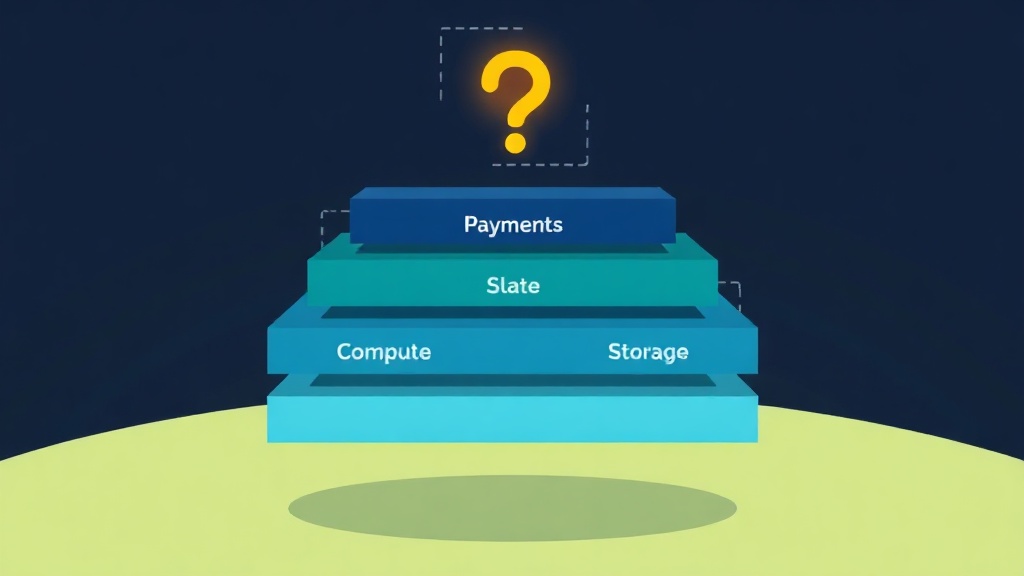
Plenty of teams have noticed this gap. A handful are sketching registries, attestation services, agent-rating platforms. Most are still pre-launch, pre-spec, or pre-trust. The piece the whole stack is leaning on — and the piece almost nobody is actually shipping — is the live, deterministic, evidence-backed verification call that one agent makes about another before handing over money or executing a workflow. That's the slot we built EVIDIQ to fill.
Machine Speed Breaks Human-Speed Trust Habits
Here's the part that breaks most older security thinking.
We evolved human trust-building to be slow on purpose. We read reviews over weeks. We ask for references. We check LinkedIn, look at GitHub, observe how someone handles a small disagreement before giving them a big contract. Reputation compounds over months. That model assumes time — and assumes humans on both ends.
[agent to agent commerce 2026] doesn't have either luxury. An agent deciding whether to call another agent's paid endpoint is making that call in roughly 800 milliseconds. It can't wait for a reputation registry to "warm up." It can't DM the other agent on Twitter to ask for references. It can't negotiate a trial period.
Three failure modes follow from this:
- Reputation cold-start. A new agent with no history looks identical to a scammer. Old reputation systems can't tell them apart.
- Sybil spam. An attacker spins up 200 fresh agents, builds fake reputation across them, drains one service, abandons all 200.
- Capability lies. An agent claims it does sentiment analysis, takes payment, returns garbage.
Human-speed review can't catch any of these fast enough. The verification has to happen inline, at call time, before the bytes go out the door. That's not a UX problem. It's an architectural one. And it demands a different shape of solution than anything built for human commerce.
What a Working Answer Looks Like Today
So what does a working verification call actually look like in 2026? We built one — verify_agent, the core paid tool exposed by the EVIDIQ MCP server and mirrored in the open Agent Skill.
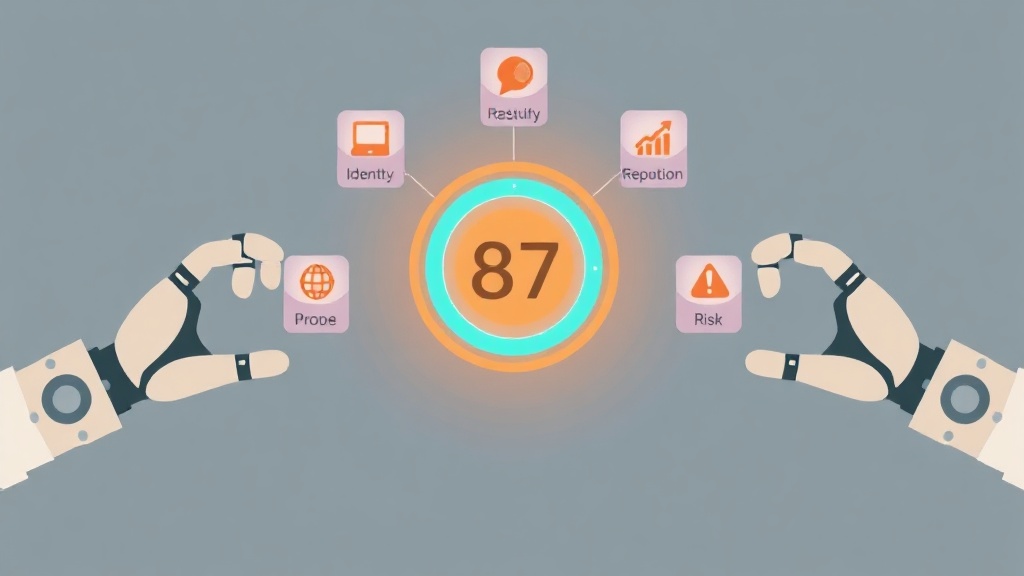
You pass it an agent identifier (an EVM address, an ENS name, an ERC-8004 id, or a domain). Inside, we run four parallel checks:
- Identity anchoring (0–100) — is there a verifiable cryptographic identity behind this agent?
- Capability verification (0–100) — does the agent's declared capability match a live probe of its endpoint? The probe is a bounded ~6 second GET that checks reachability, TLS, and whether the endpoint serves a machine-readable skill, agent-card, or MCP surface.
- Reputation signal (0–100) — does this agent have skin in the game? Today that means identity anchors plus live signals like running a paid x402 service. We're explicit that this is not yet a full historical on-chain reputation ledger.
- Risk surface (0–100) — what could go wrong if I transact with this agent right now?
The four are folded into one deterministic score:
score = identity*0.3 + capability*0.3 + reputation*0.2 + (100-risk)*0.2
Same inputs, same score. Every time. Auditable. Our team deliberately engineered it to be non-ML — no opaque model, no "trust me bro" output. You can re-run the math yourself.
The response comes back as a number from 0 to 100 plus an explicit recommendation: proceed, proceed_with_escrow, caution, or do_not_proceed. The caller decides whether to act on it. EVIDIQ never holds funds and never grants authority — we produce evidence and a recommendation, and the parties pick their own protection (direct settlement, escrow, dispute rights).
A few more details worth knowing about:
- The report is tamper-evident. Canonical report is hashed (keccak256), the evidence gets anchored on 0G Storage with an on-chain tx receipt, the AI risk analysis can run on 0G Compute inside a TEE, and the final verdict is signed with our EVIDIQ key (EIP-191). Anyone can re-fetch, re-hash, recover the signer.
- Payment is x402. Each
verify_agentcall costs a small amount of USDT0 on X Layer, settled via EIP-3009 transferWithAuthorization. Agents paying agents, native to the protocol.
The whole thing is documented at the EVIDIQ docs, and the deep-dive on the signature chain is in the EVIDIQ Notary docs.
Is verify_agent the only possible shape a verification layer could take? No — and that's fine. The point isn't that we got it perfect. The point is that some answer has to ship, with concrete inputs, concrete outputs, and concrete economics — not another whitepaper promising "rich reputation graphs" sometime next quarter.