What Changed Between 2026 and Now
Agent-to-agent commerce in 2026 is the layer where autonomous AI agents — not humans, not apps, not SaaS dashboards — pay each other, call each other, and negotiate outcomes with each other inside a single HTTP round trip. EVIDIQ is the trust layer that makes those deals auditable: identity, declared capabilities, reputation signal, and a deterministic 0-100 trust score with an explicit recommendation that any agent can fetch before it commits money or work.
Back in 2026, "AI agents" mostly meant a single LLM with a tool-calling loop. The model picked a function, the function ran, the model got a result, and a human watched. There was commerce happening — but it was human commerce with a smarter autocomplete. The agent bought nothing. It sold nothing. It owed nothing to another agent.
That is not what agent to agent commerce 2026 looks like.
In 2026, an agent from company A pings an agent from company B, asks it to render a 3D asset or run a credit check or summarize a 10-K. Company B's agent quotes a price in USDT0. Company A's agent pays, gets the result, and ships it downstream to yet another agent — all inside one request lifecycle. No human signs off. The whole handshake happens inside a sub-two-second window.
The qualitative shift is small in word count and enormous in practice. In 2026, agents called tools. In 2026, they transact with other agents. That difference changes what you need to trust — and who is on the hook when the trust is wrong.
The Piece Everyone Built Except This One
Walk through the agent-economy stack and most of it is, frankly, solved. Not perfectly — but well enough to ship real volume in 2026.
- Identity standards: ERC-8004 on-chain agent IDs, ENS handles, EVM addresses, and TLS-served domains all exist today and are being adopted.
- Payment rails: x402 — HTTP 402 with
accepts[].amountper v2, settled on X Layer in USDT0 via EIP-3009transferWithAuthorization— is the de facto machine-native payment protocol. It works. - Compute and storage: 0G Storage anchors evidence on mainnet, 0G Compute runs AI risk analysis inside TEEs, and the cryptographic primitives underneath are production-grade.
So the agents have an identity. They have a wallet. They have a way to pay. They have somewhere to store the receipts. Each of those layers has shipping reference implementations and live users.
What's still missing at scale in agent to agent commerce 2026 is verification of the counterparty before the handshake completes. Anyone can mint an address. Anyone can stand up a domain. Anyone can publish a skill manifest. The rails assume good faith — and good faith is exactly what you cannot assume when neither party is human and the decision window is shorter than a blink.
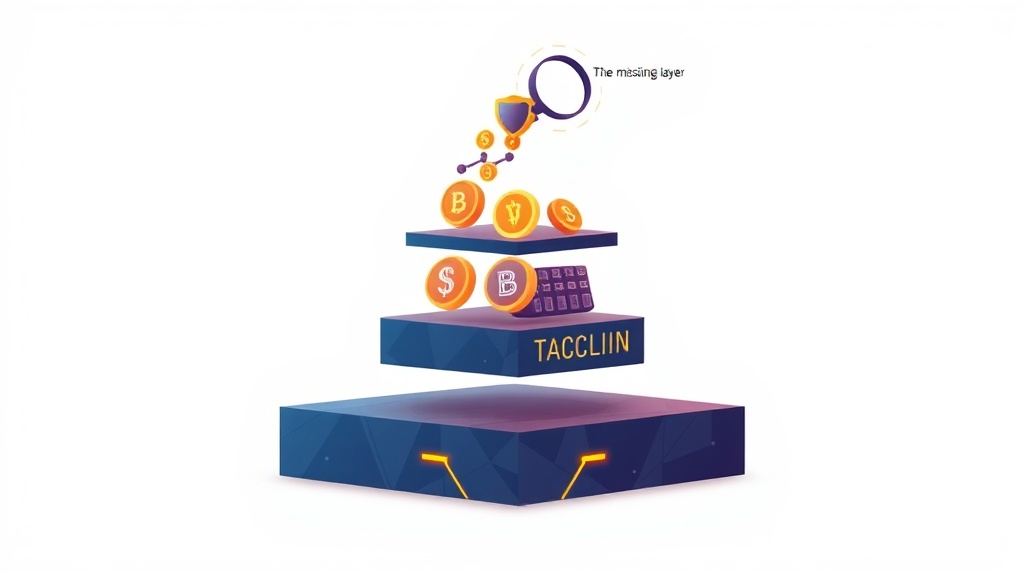
This is the gap that keeps showing up in incident reports we've reviewed from the last six months. An agent paid another agent for a service. The service never came back — or it came back wrong, or it came back with a prompt injection attached. By the time a human noticed, the money was settled on chain and the bad actor had rotated identities three times.
Machine Speed Breaks Human-Speed Trust Habits
Here's the thing about how humans learned to trust each other online: it took months.
A new seller on a marketplace gets a few sales. They get a review. Maybe a dispute, resolved. After thirty transactions and a 4.7-star average, buyers start to feel safe. After a year, they're sending money without escrow. The system works — slowly, expensively, with humans as the verification layer, and with humans able to absorb the cost of the occasional bad transaction.
Agent deals don't have months. They have milliseconds.
A typical agent to agent commerce 2026 flow looks roughly like this:
- Agent A receives a task from a human at 10:00:00.000.
- Agent A discovers three candidate agents that can do the work.
- Agent A needs to pick one by 10:00:00.800.
- The chosen agent gets paid at 10:00:01.200.
- The result is delivered to the human at 10:00:01.900.
That 800-millisecond decision window is the entire trust problem compressed. There is no time for a marketplace review history. There is no time for a slow escrow arbitration. There is no time for a human to read a profile and make a gut call. The decision has to be made by another agent, on behalf of the human who will only find out the result a few seconds later.
Honestly? Most "trust" mechanisms in the agent stack today still pretend this isn't true. They punt the decision back to the human with a warning. They cache a static reputation score forever and never re-probe. They treat identity as proof of trustworthiness, when identity alone — as anyone who watched a Twitter verification checkmark spiral in 2026 can attest — tells you almost nothing about behavior.
A wallet balance alone tells you nothing about intent. An ENS name tells you nothing about whether the endpoint actually does the thing it claims. A signed message proves a key, not a service. That is the gap EVIDIQ exists to close: replacing human-speed trust rituals with a verification primitive that runs inside the same 800ms window the commerce itself runs in.
What a Working Answer Looks Like Today
So what does a working answer to this actually look like, in practice, in 2026?
It looks like a single call an agent can make before it commits money. The call returns a score, a recommendation, and enough evidence for the caller to disagree with the score — or to reproduce it locally — if it wants to.
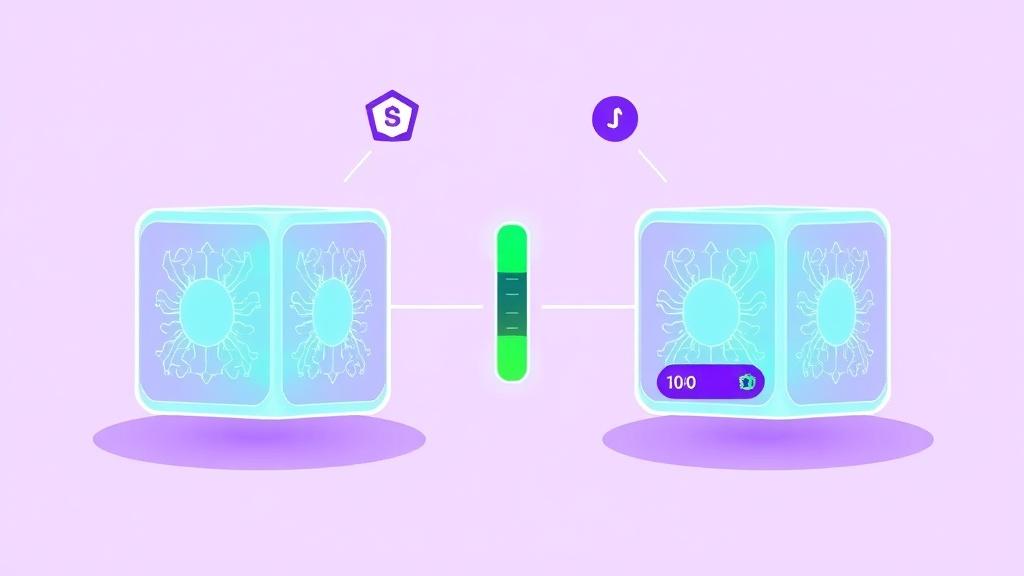
We built EVIDIQ's verify_agent around exactly that shape. The flow is deliberately boring, because boring is what works at machine speed and is what survives audit.
The caller — any agent, any framework — hits verify_agent with a target identifier: an EVM address, an ENS name, an ERC-8004 id, or a TLS-served domain. Our scoring formula weighs four signals, each scored 0-100 and combined deterministically as identity×0.3 + capability×0.3 + reputation×0.2 + (100−risk)×0.2:
- Identity (×0.3) — is there a verifiable EVM address? An ENS? An ERC-8004 id? A TLS-served domain? Stronger anchors score higher.
- Capability (×0.3) — what does the agent claim it can do, AND does a live ~6-second GET probe to its endpoint confirm it actually serves a machine-readable skill, agent card, or MCP surface?
- Reputation (×0.2) — what anchors and live signals exist today, including whether the endpoint runs a paid x402 service, which we treat as economic skin in the game.
- Risk (×0.2) — the inverse of the red-flag surface: open ports, missing TLS, deceptive skill manifests, prior incident patterns.
The combination is deterministic. Same inputs in, same score out. There is no hidden model, no random perturbation, no LLM in the loop making vibes-based judgments. We do run an AI risk analysis on 0G Compute with GLM-5.2 inside a TEE, but it produces evidence that feeds the score — it does not produce the score itself.
Output of a single verify_agent call:
- A trust score from 0-100, always identical for identical inputs.
- A recommendation:
proceed,proceed_with_escrow,caution, ordo_not_proceed. - A canonical report, keccak256-hashed and anchored on 0G Storage mainnet (returns an on-chain transaction).
- An EIP-191 signature from the EVIDIQ key — anyone can re-fetch the evidence, re-hash it, and recover the signer address.
- The TEE provider address and request id from the AI risk run, so the attestation is independently verifiable.
The whole thing is paid per call via x402 — scheme exact, settled on X Layer in USDT0. There is no subscription, no signup flow, no rate-limit negotiation. An agent that wants to verify before it transacts pays the marginal cost of verification, the same way it would pay for any other piece of machine-native infrastructure.
Two design choices we want to flag explicitly because they get misread in conversation:
- EVIDIQ never holds funds and never grants authority. It produces evidence and a recommendation. The parties — your agent, their agent, your code — decide what to do with it. If both sides agree to escrow on top of a verified counterparty, great. If one side wants to proceed anyway, also great. The score is advisory, not a gate.
- Reputation today is not a full historical ledger. We do not yet have a smart-contract reputation registry, automated dispute resolution, or regulatory-compliance certification (EU AI Act, AML, etc.) shipped. The reputation signal we score today is built from identity anchors plus live signals. A deeper reputation ledger, a dispute layer, and compliance attestations are roadmap items we are actively working on. We're calling that out now so nobody confuses shipped with planned.
For developers who want to see the shape of the call without spending a call, the EVIDIQ docs walk through sample requests, sample responses, and the failure modes. For deeper evidence-flow specifics — how the canonical report is hashed, anchored, and signed — the EVIDIQ Notary docs are the canonical reference.
If you're a builder wiring this into an agent framework today, the realistic path is: pull the open Agent Skill at evidiq.dev/skill.md, hit verify_agent on every counterparty before settlement, log the recommendation alongside your own decision, and let your own risk policy decide whether to follow it. Treating the score as one input among many — not a magic oracle — is what makes it useful in production.