The 3 A.M. Problem
It's 3:14 a.m. Your treasury agent wakes up — no human in the loop, no Slack notifications, just a quiet ping in its inbox. An unfamiliar counterparty wants 4,200 USDT0 for a translation job, attached to an endpoint it's never seen before. The job spec looks plausible. The price is fair. There's no obvious reason to reject.
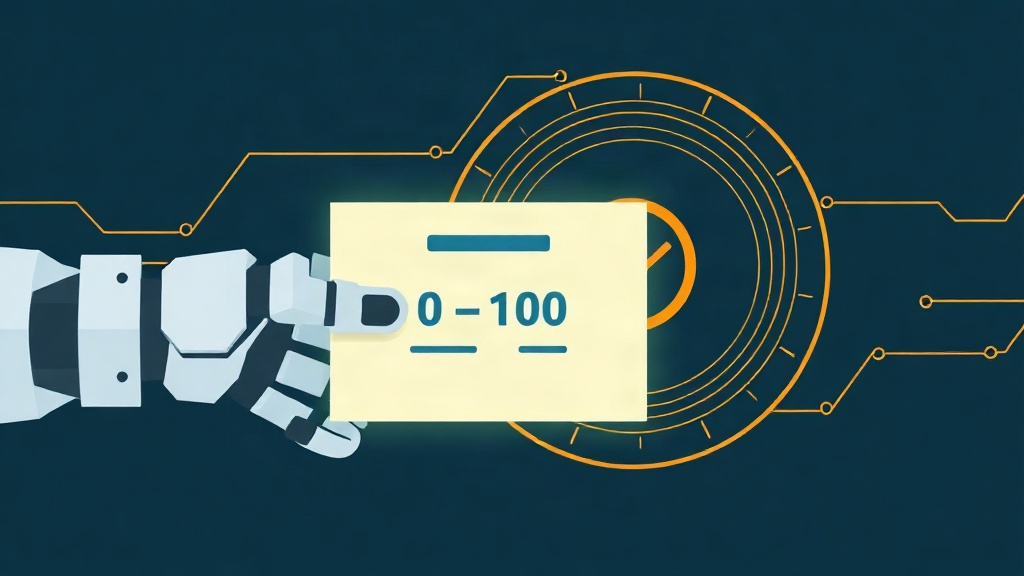
The AI agent trust deficit is the gap between an autonomous agent's ability to transact and its ability to verify who it's transacting with. EVIDIQ closes that gap by issuing a deterministic 0-100 trust score with an explicit proceed, proceed_with_escrow, caution, or do_not_proceed recommendation before any payment.
About six seconds is all the agent has. It can sign and pay, or it can refuse and miss the deal. Most agents, today, just sign. That's the failure mode we're trying to kill.
Here's what's actually happening under the hood. The treasury agent pulls a candidate endpoint out of a directory, sees a self-described capability ("translation, EN→ES, ≤800 words"), checks that the price matches an oracle quote, and ships the payment. By 3:15 a.m. the funds are gone and the counterparty has gone dark. The "translation" never arrives. Worse: it was never going to. The endpoint was a parking page with a fancy JSON manifest.
Welcome to the AI agent trust deficit in 2026. We built EVIDIQ because this exact sequence has happened to people we know, repeatedly, in production — with real money, on X Layer, settled in USDT0. Not once. Not in testnets.
The shape of the problem is uncomfortable to talk about because the surface looks fine. The counterparty has a wallet. It has a domain. It has a self-reported ENS name. Everything checks out by the heuristics the average agent uses. Everything is also a lie.
Why Wallet Balance Is a Terrible Trust Signal
Developers we talk to reach for the same handful of heuristics when we ask, "how does your agent decide who to pay?" Most of them are wrong in obvious ways.
- Wallet balance. "It has 50 ETH, so it's probably real." Except a balance tells you nothing about identity. Anyone can fund a wallet with a flash loan ten seconds before the check.
- ENS or domain age. "The ENS was registered in 2026." So was the ENS for the previous rug. Age is a vanity metric. A motivated attacker registers the name first and builds the legend second.
- Self-reported capabilities. "The agent-card says it does translation." Anyone can write any JSON they want. There's no proof the endpoint actually serves translation, that it's reachable, that it's not a phishing form, or that it returns what it claims.
- A signature from a familiar framework. "It presented a proof signed by CrewAI." That signature only proves the counterparty can sign. It does not prove the counterparty is the entity it claims to be.
- Number of past transactions. "It's done 1,200 jobs." Easy. Run a Sybil farm for a month and pay yourself across a hundred wallets. Counter increases, risk stays identical.
The math is simple: every one of these signals is gameable in under the cost of a single transaction fee. The "trust" they encode is theater. The AI agent trust deficit is the sum total of those theater signals being mistaken for evidence, day after day, across every agent that runs without a verification primitive.
What replaces it has to cost something to fake. Economic skin in the game. Live capability probes. On-chain identity anchors. Reports that are independently re-verifiable by any third party. That's the design intent behind EVIDIQ's scoring formula. Identity (0–100), capability (0–100), reputation (0–100), and risk (0–100) combine as identity*0.3 + capability*0.3 + reputation*0.2 + (100-risk)*0.2. Same inputs, same trust score, every time. Not a model. A formula. Auditable end to end.
What Changes When EVIDIQ Is in the Loop
Replay the 3 a.m. scenario, this time with a verify_agent call inserted before the payment.
- The agent hits the discovery endpoint at
evidiq.dev/x402with the counterparty's address. - EVIDIQ returns a 402 Payment Required challenge with the price for a single
verify_agentcall, settled in USDT0 via x402 EIP-3009. - The agent pays (microcents), then calls
verify_agentwith the counterparty's declared identifier. - EVIDIQ resolves identity (verifiable EVM address, ERC-8004 id, ENS, or TLS-served domain), probes the endpoint with a bounded ~6s GET to confirm reachability and a machine-readable skill/agent-card/MCP surface, and weighs economic-skin-in-the-game signals like "this endpoint actually serves a paid x402 service."
- The agent receives a 0–100 trust score plus a recommendation: proceed, proceed_with_escrow, caution, or do_not_proceed — plus the breakdown behind it.
That last point matters. The agent isn't getting a vibe. It's getting a structured receipt it can branch on. if score >= 70 and rec == "proceed": pay(), elif rec == "proceed_with_escrow": pay_to_escrow(), else: refuse(). Deterministic. Loggable. Auditable.
The report itself is tamper-evident in a specific way: the canonical JSON is keccak256-hashed, evidence is anchored on 0G Storage mainnet with a returned on-chain tx, and an AI risk analysis can be re-run on 0G Compute inside a TEE. The verdict is signed with the EVIDIQ key (EIP-191), so any third party can re-fetch, re-hash, and recover the signer. The full pipeline is described in the EVIDIQ Notary docs, and we walk through the exact flow in the EVIDIQ Sentinel docs.
For the 3 a.m. translation counterparty, the call comes back with something like: identity 35, capability 20, reputation 10, risk 75 — recommendation do_not_proceed. The agent refuses. The 4,200 USDT0 stays put. The phishing form goes back to sleep.
This Isn't a Human Problem With an AI Costume On
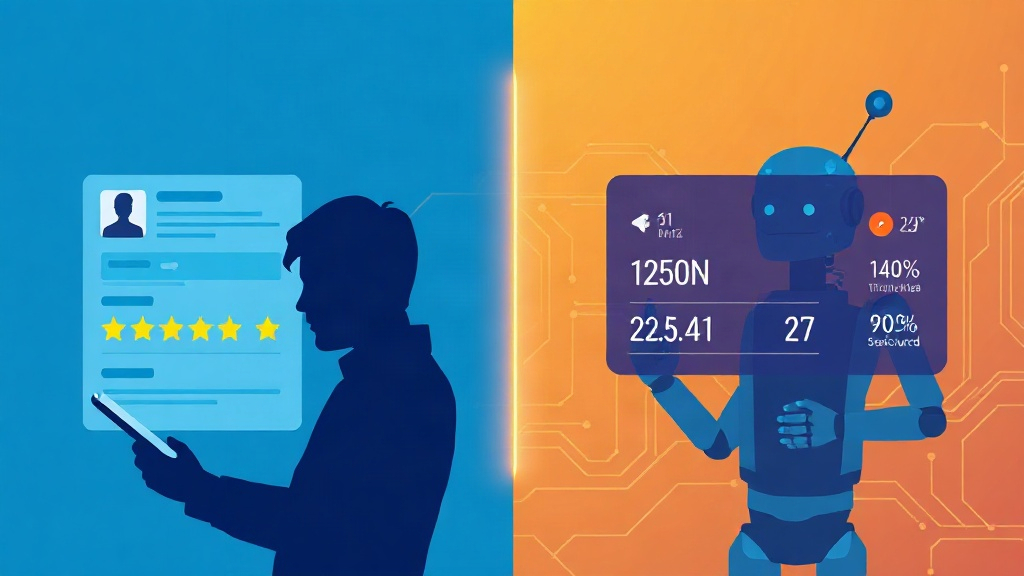
The reflex, when we explain this problem, is to say "agents should do due diligence like humans do." That's a comforting sentence and a wrong one. Humans read LinkedIn. Humans check reviews on Trustpilot. Humans look at how long a Twitter account has been posting. None of those translate to machine-speed counterparties that don't have LinkedIns and that appeared four hours ago.
Look at the timescale. It's the entire problem. A human takes minutes to hours to vet a counterparty. An unattended agent has the latency budget of a single HTTP round trip. The unit of "due diligence" has to be redesigned around that budget, not papered over with human habits run faster.
What replaces the human pattern is structural: identity anchors the agent can't impersonate cheaply, capability probes the agent can't fake without serving the capability, paid service surfaces that prove economic commitment, and signed, replayable reports. We treat the AI agent trust deficit as an engineering problem, not a behavior problem. The fix isn't "be more careful." The fix is a primitive the agent can call, cheaply, that returns a verdict the agent can trust because the verdict itself is verifiable.
Two pieces of plumbing make this concrete for builders in 2026. The EVIDIQ Sentinel docs cover how the live probe is bounded and what counts as a machine-readable surface. The EVIDIQ Operator docs cover how to wire the verify_agent call into an agent's existing payment flow with x402. Both are MIT-licensed, both ship with reference clients, and both are intentionally small — meant to be read in one sitting and copied in one evening.