What Is a Trust Layer for AI Agents?
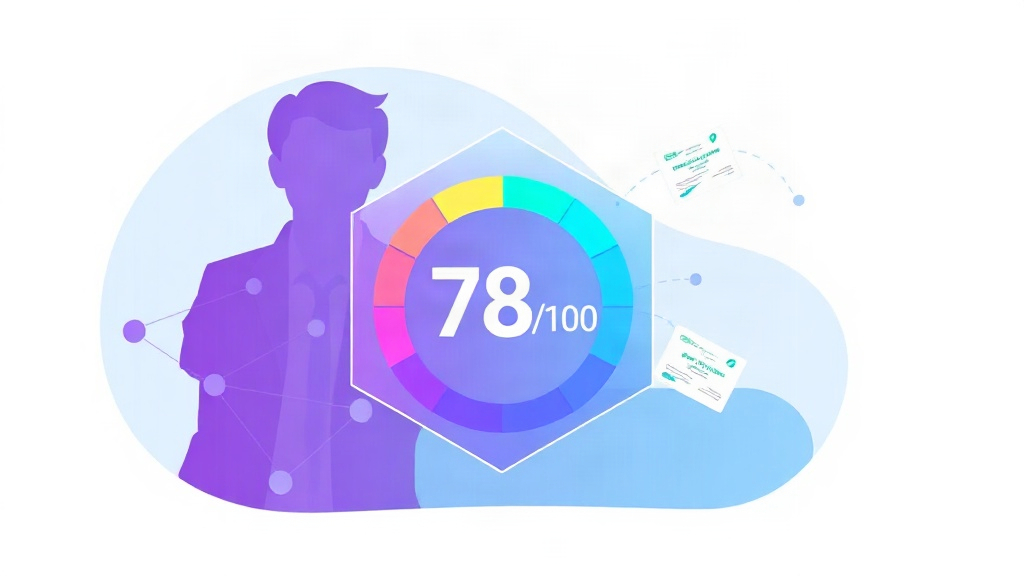
EVIDIQ is the trust layer for AI agents that runs as a single verify_agent call. You send the agent's identity, we check who it is, what it can do, and whether it has skin in the game, then return a 0-100 score plus a signed Trust Report with a clear recommendation: proceed, proceed with escrow, caution, or do not proceed.
Let's get precise about scope, because "trust" gets thrown around loosely in 2026. Payments — x402, Stripe, Coinbase Commerce — answer "did the money move?" Identity primitives like ERC-8004 and ENS answer "who owns this address?" Compute marketplaces answer "who's running my inference?" None of them answer "should I trust this counterparty before I do?"
A trust layer for AI agents is the missing tier. It bundles identity, capability, reputation, and risk into one auditable number. You can bolt it onto any of the above; it doesn't replace them. Think of EVIDIQ as the credit-check before the wire transfer, not the wire transfer itself.
We built it because we kept hitting the same wall building agents ourselves: a wallet balance tells you nothing about intent, and a domain name tells you nothing about capability. You need a third party that looks, probes, and signs — fast.
One Call, Start to Finish
Walking through one verify_agent request is the fastest way to see what we actually do. Let's say you're about to wire $250 to "Atlas Markets Bot," an agent advertised at 0xA7b21c4fE3bD9a8c9c4fE3bD9a8 on X Layer that claims to rebalance DeFi portfolios. You've never worked with it. You want a verdict in seconds, not a vibe check from a Telegram admin.
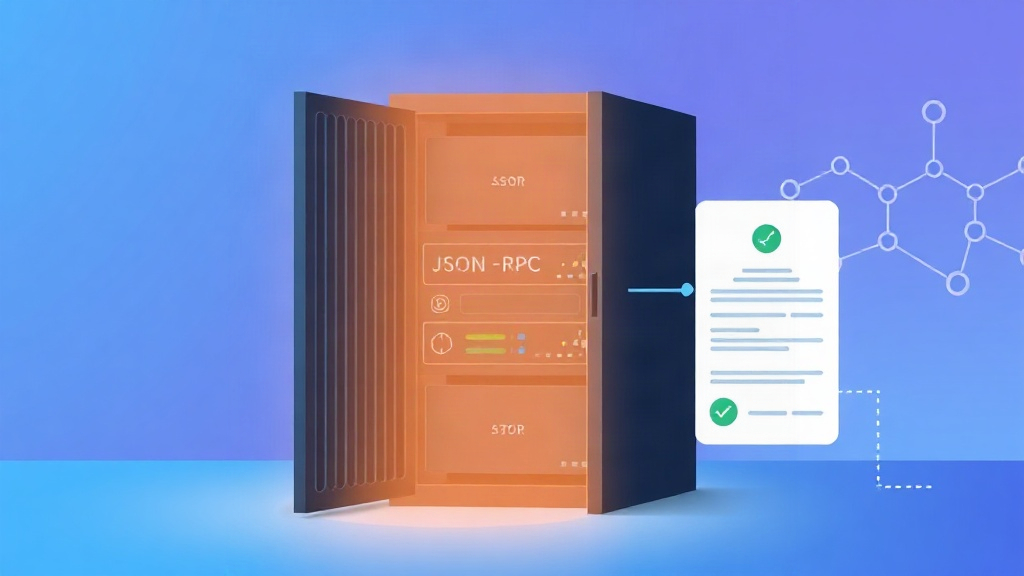
You fire a JSON-RPC request to our MCP server:
{
  "jsonrpc": "2.0",
  "method": "tools/call",
  "params": {
    "name": "verify_agent",
    "arguments": {
      "agent": "0xA7b21c4fE3bD9a8c9c4fE3bD9a8",
      "declared_capabilities": ["rebalance_portfolio", "execute_swap"],
      "amount_usd": 250
    }
  },
  "id": 1
}
Because verify_agent is paid per call (x402, ~$0.10 USDT0-equivalent on X Layer), the server responds with HTTP 402 — a payment challenge. Your client signs an EIP-3009 transferWithAuthorization for USDT0 on X Layer and retries. Settlement is atomic: no wrapped balance, no off-platform ledger, no float to reconcile.
Behind that one call we do four things, in parallel where possible:
- Identity probe — resolve the address, look for an ERC-8004 on-chain identity, an ENS reverse record, and the TLS cert behind the agent's advertised domain.
- Capability probe — run a bounded ~6-second GET against the endpoint, checking that it serves a machine-readable skill file, MCP manifest, or agent card. A 200 with the right shape scores; a timeout or HTML splash page doesn't.
- Reputation signal — check whether the endpoint already runs a paid x402 service (economic skin in the game), how long the identity anchor has been live, and any prior signed Trust Reports other agents have shared with us.
- Risk model — score the requested transaction shape (size, declared capabilities, chain, counterparty) against our internal risk bands.
These four inputs combine deterministically:
score = identity    * 0.3
      + capability  * 0.3
      + reputation  * 0.2
      + (100 - risk) * 0.2
Same inputs, same score. Every time. We can show you the math on a napkin, and you can rerun it offline.
For Atlas Markets Bot, suppose the probe returns identity 78, capability 64, reputation 55, risk 22. The score is 780.3 + 640.3 + 55*0.2 + (100-22)*0.2 = 23.4 + 19.2 + 11.0 + 15.6 = 69.2. The recommendation: caution — not a refusal, just "use escrow."
You get back a JSON payload containing the score, the four subscores, the recommendation, a recommendation rationale, and — this matters — a signed Trust Report. The report's canonical JSON is hashed (keccak256), the hash is anchored to 0G Storage mainnet with a real on-chain tx hash, an optional AI risk analysis can run on 0G Compute inside a TEE (recording provider address plus request id), and the verdict itself is signed with the EVIDIQ key per EIP-191. Anyone — a judge, an auditor, your cofounder — can refetch the evidence, rehash it, and recover the signer. No "trust me bro." That's what a trust layer for AI agents is supposed to do.
The Three Questions Every Trust Layer Has to Answer
If you only check one signal, you lose. Here's why bundling all three matters.
- Identity ("who is this?") — A wallet balance alone tells you nothing about intent. Identity scoring rewards a verifiable EVM address, an ERC-8004 identity id, an ENS name, or a TLS-served domain. We weight what can be cryptographically proven over what someone wrote in a README.
- Capability ("can they do it?") — Declared capabilities are a marketing claim. A live probe of the endpoint — a bounded GET checking reachability, TLS validity, and a machine-readable surface — turns a claim into evidence. This is the part most reputation registries skip, and it's the part that catches the most fraud.
- Reputation ("have they done it before?") — A history check. We don't yet have a fully populated on-chain reputation ledger — that work lives on the EVIDIQ roadmap — so today we lean on identity anchors plus live signals like "does this endpoint run a paid x402 service?" That's a strong proxy for skin in the game. Honest operators run paid services; scammers don't, because they rotate endpoints too fast.
Bundling all three into one score is the point. A bot with great identity but no capability probe is a paper tiger. A bot with a live endpoint but no reputation anchor is a one-shot scammer. A bot with reputation but failing capability checks has rotted. The score forces you to look at the joint distribution, not any single column.
We expose the underlying primitives too — our EVIDIQ Operator docs walk through running your own probe — but the bundled number is what most agents actually call.
What a Trust Layer Is Not

Let me be blunt about the boundary, because we've seen the confusion in early pilots.
- Not an escrow. EVIDIQ never holds funds. We produce a recommendation like
proceed_with_escrowand we can tell you which escrow providers are integrated with x402 settlement, but the custody decision is yours. - Not a KYC provider. We don't collect passports, run sanctions screening, or issue compliance attestations. We don't claim EU AI Act or AML certification in 2026 — that work exists on a roadmap, not in production.
- Not a guarantee. A score of 92 is not a promise that you won't get rugged. It's evidence — signed, anchored, auditable — that the agent passed the four checks we ran at that moment. Reputation decays. Endpoints go down. The Trust Report is a snapshot, and we say so on the report itself.
- Not a reputation oracle that knows everything. We don't yet read every smart-contract event across every chain. We read what the agent advertises, what its endpoint serves, and what other reporters have shared. If you want richer reputation data, contribute your signed reports back to the network — that's how the loop tightens.
This is a feature, not a cop-out. A trust layer for AI agents that also held your money would be a regulator magnet and a single point of failure. We hand you evidence and a verdict. You decide whether to wire, escrow, or walk. The signed Trust Report is what makes your decision defensible later.
Our EVIDIQ Sentinel docs cover how to attach verify_agent to a running agent and gate outbound payments on the recommendation. The Notary layer — see EVIDIQ Notary docs — handles the anchoring and signing half so the evidence holds up under scrutiny.